
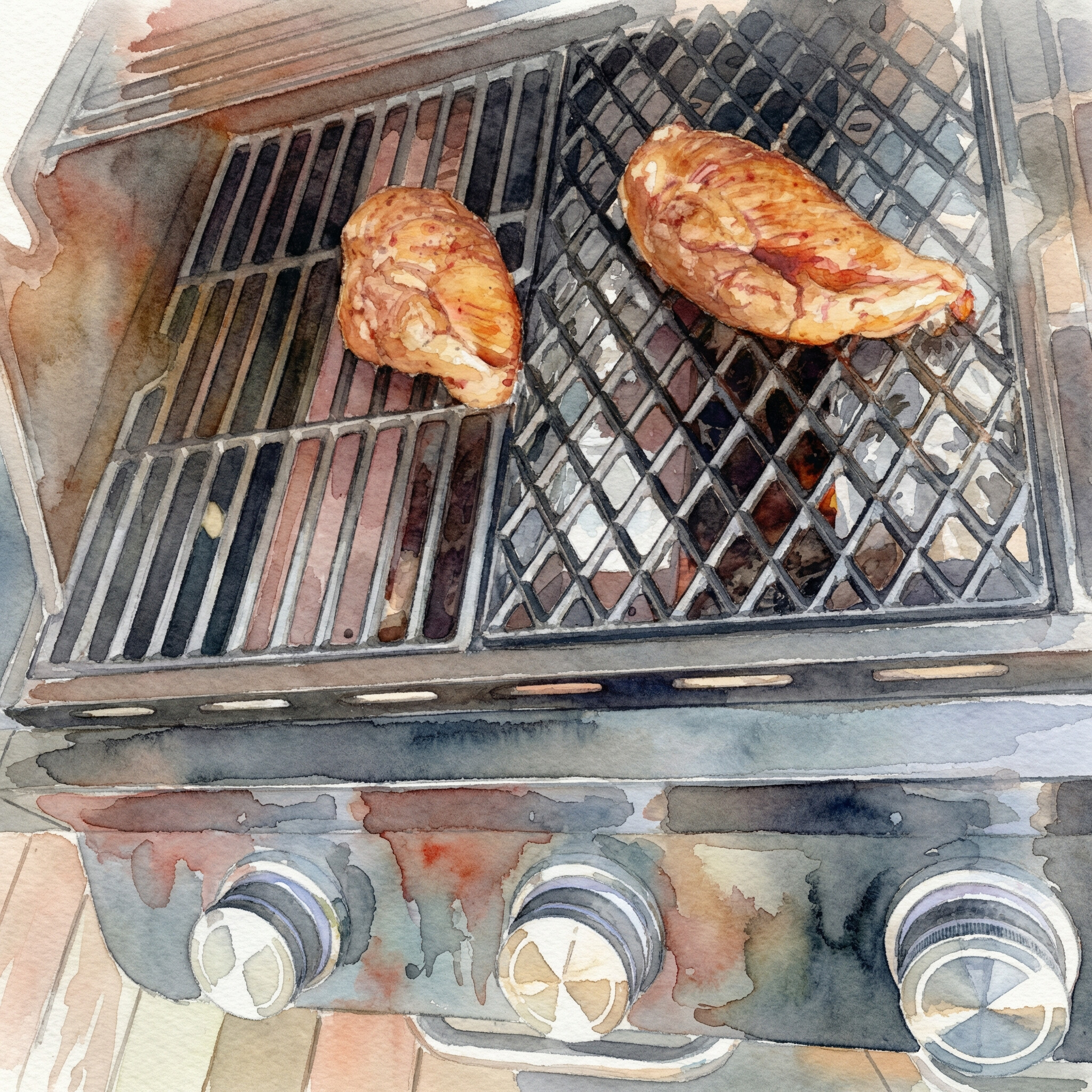
If you’re anything like me, the details behind grilling gear tend to sneak up on you. When I took a closer look at my backyard grill setup, the one piece that really changed my cooking style was the grill grate. It’s easy to overlook, but your grill grate controls more than just the noticeable grill marks or how easy cleanup ultimately is.
If you’re on the hunt for the proper grill grate or want to know why food sticks sometimes and why those sear marks form, understanding the main types and what they’re good at is quite handy. Here’s a practical breakdown of different grill grates and how they actually impact your grilling results.
Why Grill Grates Matter
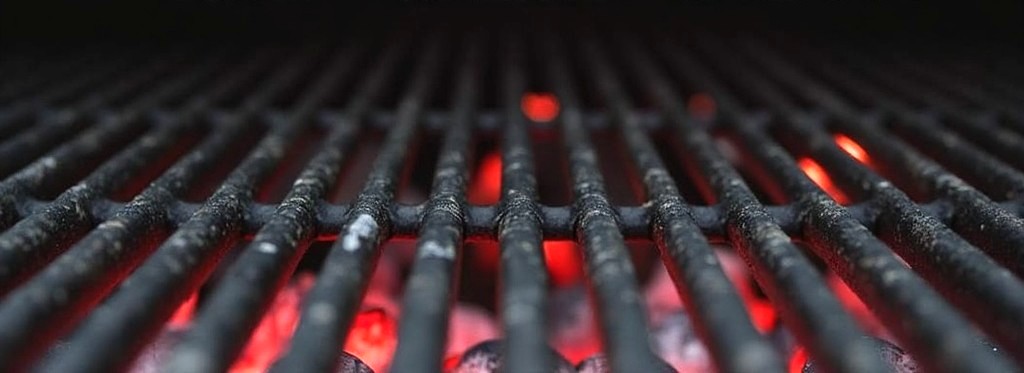
The grill grate is a direct line between your food and the heat source, so the material and design make a difference in everything from browning to cleaning time. Some grates hold heat longer for that nice sizzle, while others are easier to care for but might not give you dramatic char lines. Picking a grate that fits your routine and favorite foods makes grilling feel a lot more rewarding.
The barbecue market has expanded way beyond simple wire racks. You’ll see heavy-duty cast iron, sleek stainless steel, budget-friendly chrome-coated, and more specialty options on most shelves. With so many picks, it’s always good to know what each brings to the table. Let’s break these down so you can match your grilling style and your favorite recipes to the right kind of grate.
Types of Grill Grates
I’ve cooked on a spread of grill grates, and each has its own strengths and quirks. Here’s what I’ve picked up, sometimes through trial and error and sometimes just by
talking to other grillers:
- Cast Iron Grill Grates
- Porcelain Coated Cast Iron Grates
- Stainless Steel Grates
- Porcelain Coated Steel Grates
- Chrome Plated Grates
- Specialty and Custom Grates
Cast Iron Grill Grates
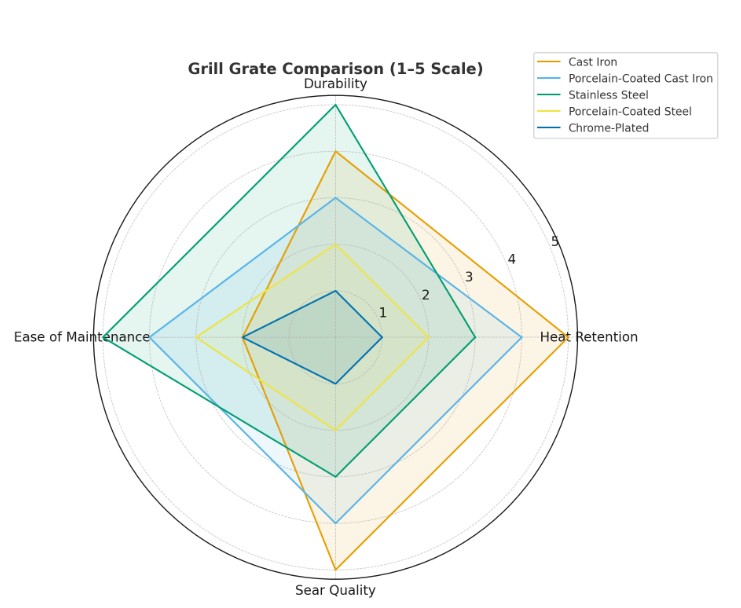
I’m always impressed by how cast-iron grates deliver those classic sear marks everyone talks about. The heat retention is pretty impressive. These grates stay hot even when you drop cold steaks or thick burgers on them. Once they’re hot, you get reliable, even browning across the entire grate surface, so every burger looks professional.
Pros: Holds onto heat for extended periods, produces deep grill marks, and with proper care, can last for years. A well-seasoned cast-iron surface almost acts like nonstick, so food lifts right off after cooking.
Cons: These items are heavy, which is a consideration if you frequently need to remove your grill grates for cleaning. If you slack off on seasoning, rust appears quickly. They require regular oil changes and minimal maintenance to stay in good condition.
Best for: High sear at the start of cooking, juicy steaks, pork chops, burgers, and anything that likes a thick, crusty exterior. For anyone who likes a hearty flavor and texture, cast iron is hard to beat. Please handle it with care due to its weight and potential for rust if not correctly maintained.
Porcelain Coated Cast Iron Grates
If maintenance isn’t your style, but you still want a solid sear, consider porcelain-coated cast iron. You still experience severe heat retention, similar to bare cast iron, but a porcelain coating is applied over the top, which helps prevent sticking and reduces the risk of rust.
Pros: Stays hot for a long time, releases food more easily, so fish and delicate foods are less likely to break apart, and generally resists rust if the coating stays intact. Effortless cleaning most of the time, brush and go. You get most of the benefits of cast iron without as much fuss over rusting.
Cons: The main downside is the coating itself. If you use metal scraper tools or they chip from drops, the cast iron underneath can rust where it’s exposed. Being gentle is the best approach when scraping or moving your grate around. Also, it’s essential not to use sharp tools that could dig in.
Best for: Balanced grillers who like easier cleanup than bare cast iron but still want those sear lines, including weeknight dinners or quick Sunday cookouts. Anyone wanting a good blend of sticking resistance and solid grilling power will enjoy this choice.
Stainless Steel Grates
Stainless steel grates, sometimes labeled as ‘lifetime’ grates, are a versatile choice due to their durability. They are perfect for grilling veggies, thinner cuts of protein, and any time you don’t want to worry about rust or the hassle of finicky cleaning. They are also a favorite for people who regularly throw parties or cook for larger groups.
Pros: Durable, light enough to pick up single-handedly, rust-resistant, and easy to scrub down. They don’t require much attention and will last through many cookouts. Stainless doesn’t react with acidic marinades either, which is a nice bonus with certain foods. Over time, you’ll notice more patina, but it won’t impact the food quality.
Cons: Stainless steel doesn’t hold heat quite like cast iron, so while you can grill fast, you may not get dramatic grill marks every time. They can also discolor over time, but this doesn’t affect the food quality—only the shine and appearance of the grates.
Best for: Fast grilling for a crowd, veggies, seafood, chicken, and when you want something low-maintenance. Stainless grates are the standard for busy cooks who don’t want extra hassle.
Porcelain Coated Steel Grates
Porcelain-coated steel grates are an economical choice if you want some of the sticking resistance of fancier grates but aren’t ready to spend a lot. They’re light, smooth, and work for most casual grilling sessions, making them a thoughtful and budget-friendly option.
Pros: Lower price point, smooth to the touch, pretty good sticking resistance when new, and quick to clean off after use. They don’t weigh much, so lifting for cleaning or swapping between grills is easy, and anyone can manage it.
Cons: These grates don’t retain heat as well as cast iron, and the coating may chip if you use stiff-bristled brushes or drop them on the surface. Once chipped or scratched, rust can quickly settle in on the exposed steel underneath and spread rapidly if not addressed. Avoid using sharp or metal brushes on these grates to ensure they last.
Best suited for: First-time grillers, those on a budget, or for grills used infrequently. They’re also handy for seasonal grilling when you don’t want to worry about keeping things in perfect shape year-round.
Chrome Plated Grates
Chrome-plated grates are the starter pack of grill grates. They’re usually found on basic portable or disposable grills. They look professional when new, but aren’t built for the long run and are best suited for a quick, inexpensive solution for a picnic or camping trip.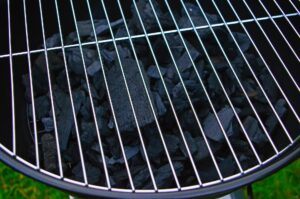
Pros: Lightweight and easy to handle, bright shiny finish at first, and one of the cheapest options around. If low cost and portability are the top priorities, these options will work just fine. They’re perfect for outdoor parties where cleanup is a breeze and you won’t mind tossing them afterward.
Cons: Low heat retention, super prone to flaking and rusting once the coating chips. You should expect to replace these regularly. Not recommended for use with anything sticky or delicate, as food can cling to bare spots and stick stubbornly. Lifespan isn’t long, but they’re easy to replace.
Best for: Occasional grillers, camping trips, or backup grills you break out once or twice a year. If you’re grilling away from home, it’s the hassle-free option.
Specialty and Custom Grill Grates
Once you’ve spent some time around the grill, you may want to branch out with specialty grates. There are a few cool features in this realm that make certain types of grilling easier and can add some variety to your results:
Cast Stainless Steel Grates
This is where the toughness of stainless steel is combined with more mass, allowing it to hold heat better and produce deeper grill marks, as you’d expect from cast iron. Not as heavy as true cast iron, but holds up almost as well. These are more expensive but can last for many years of weeknight and weekend grilling without any trouble. It’s an upgrade for grillers seeking that perfect balance between durability and searing power.
Rod vs. Flattop Grates
Thicker rods (think thick, round bars) get hotter and make those classic char lines. Flattop or wide grates spread the food out and can help prevent smaller items from slipping through, but may not make the same iconic lines. Choosing between them comes down to the food you cook most often, such as sausages, fish, or smaller vegetables.
Custom Options
There’s a world of custom grates, from expanded metal cut to your grill’s exact specifications, to infrared grates that channel heat differently for a unique cooking experience. Some high-end ceramic inserts claim to enhance searing or reduce flare-ups, and some grillers have even had their grates custom-welded to suit their particular cooking style. Specialty grates can spark new creativity at the grill, allowing you to experiment with your grilling adventures.
Buying Tips: How to Pick the Best Grill Grate for You
When I shop for a new grill grate, these factors always steer my decision, and I recommend keeping them in mind too:
- Maintenance Style: If scrubbing and oiling isn’t for you, stainless or porcelain-coated grates are friendlier. Bare cast iron is ideal for grillers who enjoy tinkering and seasoning their gear after each use, as it requires that extra bit of attention.
- Budget: Porcelain-coated steel and chrome-plated grates are easy on the wallet, but you’ll replace them faster. For a buy-it-once approach, consider cast iron or high-quality stainless steel, as these materials can save money over the long run.
- Cooking Style: Meat lovers and steak fans might want the heat and crust of cast iron, while veggie grillers or those doing lots of fish might prefer a surface that’s more about sticking resistance and less about sear marks for delicate, flaky foods.
Also, if you grill frequently throughout the year, please check the climate in your area. Humid climates can accelerate the rusting of steel grates, making rust resistance a greater concern, while dry regions may require less worry about water damage or corrosion.
Common Challenges and How to Handle Them
- Rust: Happens on bare cast iron or on any grate with a chipped coating. Keeping your grate oiled and storing it out of the rain can significantly reduce rust. For stubborn rust, a stiff brush and some elbow grease or a vinegar soak do the trick. Rust is a common occurrence with any outdoor grilling gear, and prompt action helps prevent it from becoming a significant issue.
- Food Sticking: Even coatings that claim to be nonstick can let you down if you don’t preheat the grill or oil the food. Getting your grill nice and hot before adding food always helps. A brush of oil directly on the food also makes a big difference in preventing sticking.
- Coating Damage: Using metal tools and aggressive cleaning can chip porcelain and chrome coatings. Switch to nylon or brass brushes, or at least avoid harsh scrapers, to extend the lifespan of your grates. Gentle cleaning after each use can keep them in good shape for years.
Rust
No matter which grate you choose, storing it correctly is a significant help in preventing rust. After cleaning, I sometimes finish with a wipe of cooking oil for an added layer of protection, especially if I’m storing the grill for the winter. Even covering the grill keeps off rain and morning dew that can speed up rusting. If rust appears, tackle it quickly before it spreads.
Food Sticking
Even on grates that claim “nonstick,” letting things preheat fully and oiling the food, not just the grate, gives better odds that everything slides right off, crust and all. Using a grill basket for very delicate items, such as thin fish, can also help limit sticking and keep the food together.
Coating Wear
Sticking to softer bristle brushes and avoiding banging grates around makes the porcelain or chrome last a lot longer. If a chip occurs, you can sometimes sand it smooth and apply a light coat of high-temperature grill paint, but at some point, a replacement is just easier, and a fresh grate enhances the quality of your grilling. Gentle handling is crucial for the longevity of these types of surfaces.
Most challenges are manageable if you pay attention to the setup and cleaning process. Swapping out grates is a simple way to change your grilling results, and experimenting with different options keeps the hobby interesting. If you ever want to give your weekly cookout a boost, swapping the grate for a different material or style can make your next meal feel brand new.
Popular Ways Grill Grates Are Used
- Classic Barbecue: Sear marks and crust from cast iron or rod-style stainless grates on steaks, burgers, and chicken thighs never go out of style. This gives food the classic steakhouse look right at home and brings out a next-level, superb grilled flavor.
- Vegetable Grilling: Nonstick porcelain-coated or closely set flattop grates keep veggies from falling through and make cleanup after saucy marinades easier. These types also shine for grilled fruits or smaller plant-based burgers.
- Portable Cooking: Cheap and lightweight chrome-plated grates make quick picnic or camping grilling possible, with the plan to toss the grate after a few uses. They simplify outdoor cooking without requiring too much commitment, allowing you to keep things easy while traveling or tailgating.
I’ve seen grillers swap out their go-to grate based on what’s for dinner, and with so many choices at your fingertips, it’s easy to find one that matches your routine. Many grilling enthusiasts even keep a couple of different styles on hand to mix things up or cover all the bases for parties or large family gatherings.
Frequently Asked Questions
Question: How do I know when to replace my grill grate?
Answer: If your grate is deeply pitted, cracked, or the coating is peeling everywhere, it’s time to upgrade. Some light surface rust can be scrubbed off, but once holes appear, it’s better to opt for a new one for safety and even cooking.
Question: Can I use different grates in the same grill?
Answer: Many grates are interchangeable, as long as their sizes are compatible. Mixing and matching for different grilling styles is totally possible. Just make sure the one you pick sits securely inside your grill and check for any movement that could be unsafe.
Question: Are aftermarket grates worth the price?
Answer: Upgrading to a cast-iron or heavy-gauge stainless grate often yields better performance and lasts longer. If you grill frequently, it’s usually worth paying a bit more upfront as you’ll save in the long run and enjoy a better cooking experience.
Tying It All Together
The best grill grate for you really depends on what you love to cook and your willingness to keep it clean and rust-free. Swapping out an old, rusty, or hard-to-clean grate for a new one can revive a tired grill, and trying a different material might even enhance your flavor or grilling satisfaction.
Don’t be afraid to experiment and figure out which type of grate yields the best cookout results for you. With a bit of experimentation, you’ll find the perfect grate for every barbecue adventure!
Happy grilling!
Enjoy that great BBQ taste!